The Algorithm Has Taken Over Football: We’re Watching Reactions, Not the Game
Social media algorithms are shaping not only what we see about football, but also what gets made in the first place. As outrage, repetition and familiar formats win the battle for visibility, more of the game is being pushed out of view.
This article was originally written in English .

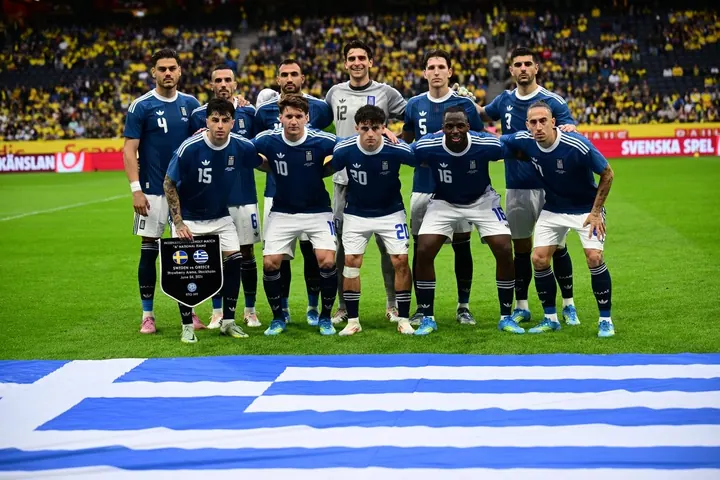
A football match lasts 90 minutes. Social media often leaves us with only a few seconds of it: the goalkeeper’s mistake, the missed penalty, the controversial refereeing decision, the manager’s expression on the touchline, an argument in the stands or a clip of a player stripped of its context. By the following morning, millions of people around the world may be discussing the same match, but a large part of them will have been shown the same tiny fragments of those 90 minutes over and over again. There is something bigger happening here than simply a decline in our attention spans. Social media is no longer just one of the places where football is distributed; it has become a system with considerable influence over what becomes visible, which debate grows and, indirectly, which football stories are considered worth telling. A five-minute analysis explaining why a pressing structure failed is competing in the same environment as a seven-second clip of a player’s mistake with the words “How is this guy a professional footballer?” written across it. A story about how an academy develops players over several years is competing with a “Top 10 Wonderkids in World Football” list. The relationship between a women’s team and its community, the survival of a small club, the experience of a coach working in the lower divisions or a football culture that rarely attracts international coverage all enter the same contest for visibility as the latest argument surrounding a handful of globally recognised players. The algorithm does not need to understand football. It only needs to understand where people stop scrolling. And increasingly, this is no longer only changing what we watch. It is changing what gets made.
The Algorithm Is Not a Neutral Editor
Meta explains that its ranking systems on Facebook and Instagram attempt to predict how valuable a piece of content will be to a user, with the likelihood of sharing among the signals involved. TikTok similarly describes likes, comments, shares and, particularly, viewing behaviour as important factors within its recommendation system. Technically, these are ranking signals. But in a world where billions of people encounter news, information and culture through these platforms, they also create substantial editorial power. Visibility is finite. When one piece of content rises, something else remains further down the feed. A major algorithmic audit published in 2025 found that Twitter’s engagement-based ranking amplified more emotional, angry and hostile political content towards opposing groups compared with a reverse-chronological feed. The research was not about football and should not be treated as direct evidence about the sport, but the incentive structure it describes hardly feels unfamiliar. Football already produces powerful emotions through competition, identity, success and disappointment. An algorithm does not need to create any of them; it only needs to identify which ones generate the strongest reaction. Explaining why a player is performing badly requires watching the game, providing context and sometimes waiting for several matches before reaching a conclusion. Saying “this player isn’t good enough” takes seconds. One invites thought, the other immediately asks people to choose a side. In that kind of environment, accuracy and context do not always compete on equal terms with the ease of provoking a reaction.
There Is More Football Content Than Ever. But Are There More Football Ideas?
The original promise of social media for football was enormously valuable. The limited publishing space of traditional media could disappear, allowing a small football story from almost anywhere in the world to find an audience. Women’s football, lower divisions, academies, amateur clubs, independent analysts, scouts, coaches and supporter communities that would once have struggled to get any space in national newspapers or major broadcasters could speak directly to their own audiences. Much of that is technically possible today. Yet it is difficult to open a feed without noticing how often football content begins to look the same: hundreds of versions of the same transfer rumour, the same goal edited to different music, endless “overrated or underrated?” debates and familiar templates such as “top five”, “top ten”, “I’ll get hate for saying this”, “nobody is talking about this” or “it’s time we put some respect on this player’s name”. When one format works, dozens of versions quickly follow. That does not mean football creators lack imagination. In many cases, they are behaving perfectly rationally. If a story you spent several days researching reaches a few thousand people while a familiar format made in ten minutes receives hundreds of thousands of views, you do not need to understand algorithm theory to know which one you are more likely to try again. Over time the headline becomes slightly more aggressive, the video a little shorter, the more recognisable player moves into the image, the controversial part is pushed closer to the beginning and the format that succeeded elsewhere gets another outing. A lesser-known story can be rejected before any work begins because the thought that “this won’t get much reach” has already entered the editorial decision. Original content is not being removed, but it is becoming a more uncertain proposition. Imitation is easier to predict.
Imitation Is Narrowing the Way We See Football
The result is not simply a collection of accounts that look increasingly similar. The football world we are shown begins to look more similar too. Football itself contains hundreds of professional leagues, thousands of clubs, women’s and men’s teams, youth academies, amateur competitions, futsal, different coaching traditions, scouting networks, supporter movements and communities operating under completely different economic conditions. The football map that reaches our feeds can be much smaller: the biggest leagues, the biggest clubs, the most recognisable players, transfer windows, managerial crises, refereeing controversies and short skill compilations. Part of this comes from the basic logic of the system. Large clubs already have large audiences. Those audiences create the first wave of engagement, engagement increases visibility, visibility produces more engagement and the story that was already large becomes larger again. Women’s football, lower divisions and smaller football markets are not pushed aside because they produce fewer interesting stories; they often begin the race without the same advantage. Eventually the user sees another version of a transfer rumour instead of discovering a part of football they have never encountered, while the creator chooses a subject whose potential reach is easier to predict instead of researching something less familiar. There is no single person in a control room making these decisions. Thousands of people are simply responding independently to similar incentives. The outcome is slightly strange: the internet gave us the possibility of reaching almost the entirety of world football, yet the systems we use can keep sending us around the same small section of it.
Outrage Is One of the System’s Most Efficient Fuels
Alongside repetition sits anger. A Yale study examining 12.7 million posts from 7,331 users found that people who received greater social rewards when expressing outrage were more likely to express outrage again in later posts. That matters because the system is not simply ranking what people already say; it is constantly showing them which behaviour works. Football is particularly suited to this kind of feedback loop. Every week brings new results, new mistakes, transfer rumours, refereeing decisions and debates around managers. When one crisis ends, finding the next is rarely difficult. The language around football changes with it. A player who performs badly has not simply had a poor match; he is “trash”. A signing who arrived with huge expectations but has not immediately settled can be labelled a “flop” within weeks. A manager’s decision is no longer debated in isolation; sometimes an entire career is dismissed in a handful of words. None of this began with social media. Football terraces have always been capable of cruelty and old sports newspaper headlines were hardly models of restraint. What has changed is the speed, scale and repetition. It is now possible to see the same judgement hundreds of times within hours of the final whistle. An opinion therefore does not appear only because it is popular; repeated visibility can also make it feel more widespread, more authoritative and more inevitable than it really is. TikTok’s own discussion of efforts to break repetitive recommendation patterns and diversify what users see shows that this is a recognised issue at platform level. Sometimes we think we are following the football conversation when we are really consuming different packages of the same conversation.
The Anger Is No Longer Aimed Only at the Opposition
Another notable change in digital football culture is how often anger now turns inward. Rivalry has historically given supporters an external opponent: another club, another set of fans, another city or another country. That remains part of football, but social media has also turned internal tension within clubs into a continuous source of content. One supporter criticises a player, another defends him, one group blames the manager, another targets the board, and within hours the discussion can move from the match itself to an argument over who counts as a “real fan”. There is something especially useful about this from a social media perspective. You do not play your rival every day, but you can talk about your own club every day. A crisis no longer has to wait for matchday. A player’s contribution over several years can be reassessed through the mistake he made in the last game. A young footballer can be labelled within days through a compilation of his worst moments. Another can build an online reputation far beyond his actual performances through a few aesthetically impressive clips. Eventually the player on the pitch and the player circulating through social media begin to feel like two different people.
A study by Ofcom and the Alan Turing Institute examining more than 2.3 million messages directed at Premier League players during the first five months of the 2021-22 season found that 68 per cent of players received abusive messages at least once, while a significant proportion of that abuse was concentrated on a relatively small group of players. FIFA’s figures from the group stage of the 2026 World Cup also underline the scale of the problem. More than six million posts and comments were reviewed, with 89,000 pieces of content confirmed as abusive after human assessment and around 181,000 hateful comments hidden. FIFA’s study of the 2023 Women’s World Cup also found that female players faced a higher risk of online abuse than players at the men’s tournament. Reading these figures simply as proof that “algorithms make people abusive” would be far too easy. Racism, sexism, homophobia and cruelty are much older than social media companies. But it is equally difficult to ignore the systems through which those behaviours now travel, the speed with which individual players can become enormous targets and the way visibility can concentrate abuse around them.
More Voices Do Not Automatically Mean More Pluralism
One of social media’s most valuable qualities remains the fact that almost anyone can publish. People can talk about football from anywhere in the world without being attached to a major media organisation. Being able to speak, however, is not the same as having an equal chance of being heard. A study of 1,624 women discussing men’s football on social media in the United Kingdom found that 46.6 per cent had encountered sexist or misogynistic attitudes and 44.8 per cent reported receiving direct sexist abuse. The study focuses on a specific country and group of supporters, but it exposes a wider question. A space can be theoretically open while becoming much less pluralistic in practice when some people pay a far higher price for participating in it. Over time, people post less, lock their accounts, withdraw from certain discussions or limit themselves to subjects where they feel safer. Content creation faces a similar pressure. Trying something new can demand more work, involve greater uncertainty and sometimes expose the creator to more hostility, while a familiar format offers a much more predictable return. A space with more people speaking can therefore end up producing surprisingly fewer different things. Football may now generate more content than at any point in its history. It is much harder to be certain that this has given us an equal increase in ideas, perspectives or the size of the football world we actually see.
Football Media Is Not Just a Victim of the System
It would be too convenient to leave all responsibility with social media companies. Clubs, broadcasters, football websites, fan accounts, journalists and independent creators have also spent years learning what works. Headlines changed, transfer reporting accelerated, the most controversial few seconds of an interview moved to the front and some post-match analysis became less about understanding a footballer and more about judging one as quickly as possible. The boundaries between news and entertainment, rumour and information, criticism and humiliation have become increasingly difficult to separate. An MIT study analysing roughly 126,000 news cascades found that false stories travelled further, faster, deeper and more broadly on Twitter than true stories. Again, the research was not specific to football, but the incentives are easy to recognise in transfer reporting. “Talks are continuing” sounds uncertain and perhaps even boring. “Deal done” is definitive, shareable and exciting. The first statement may eventually prove accurate; the second can reach thousands of people within minutes. Verification takes time, and social media is an environment that rewards speed. Clubs are not outside this culture either. Across different football cultures, posts mocking rivals are often praised as excellent social media work while short-term engagement can become more important than the tone of institutional communication. When the same organisations later condemn abuse directed at their own players, they are right to do so. But it is difficult to build football communication around constant confrontation and then assume the boundaries of that confrontation can always be controlled.
The wall between online football and the football played on the pitch is not especially thick anymore. Club executives see social media, players see it, agents and sponsors see it, while journalists already work inside the same information cycle. Suggesting that professional scouts make recruitment decisions after watching a handful of short videos would obviously be absurd; the relationship is much less direct than that. Digital reputation can still create expectations, expectations can become pressure, that pressure can enter the media agenda and the media agenda can return to the stands. Reactions from the stands then return to social media. It is increasingly difficult to assume that a digital narrative built around a player for several weeks never finds its way into the real football environment. The European Commission’s requests to YouTube, Snapchat and TikTok under the Digital Services Act for information about the risks recommendation systems may pose to harmful content, mental health and media pluralism show how far this debate has already moved. Recommendation systems stopped being merely a question of how much time we spend looking at our phones a long time ago. Football has no particular reason to be immune from their effects.
Football Does Not Need to Escape the Algorithm
Ignoring what social media has given football would be unfair. Small clubs can find supporters in other countries, female players who were once given little space in traditional media can tell their own stories directly, independent analysts can build audiences without working for major broadcasters, coaches can share knowledge and supporters can discover football cultures they might never have encountered a few years ago. That is precisely why the real question is not whether social media should exist, but what happens when visibility gradually becomes the main measure of an idea’s value. If we begin judging an interview only by the number of people who opened it, placing the story of a small club in the same competition as a major transfer rumour and evaluating a long analysis by the engagement it receives in its first hour, the priorities of the algorithm begin to mix with our own editorial priorities. Eventually the platform does not need to tell us what to write. We already know what works. Perhaps football media, clubs and independent creators occasionally need to return to simpler questions: Is this story genuinely worth telling? Is there something here that we have not seen before? Does this piece make the football world we know slightly bigger? Not everything has to go viral. A good interview with a lower-league coach may be read by a few hundred people. A story explaining how a small women’s club survives may never reach millions. The experience of a scout working in a little-followed league may never appear in a trending list. If their value is measured only by the number of people they reach, football media will have voluntarily made its own world smaller. Sometimes the job is to look where everybody else is looking. Sometimes the real work begins by looking somewhere else.
Football Is Bigger Than This
Algorithms did not invent football and they are not responsible for every problem surrounding the game. Supporter anger, poor journalism, false transfer stories, hostility towards rivals and disproportionate attention around famous players all existed before social media. What is different today is the scale of the distribution system that brings them together. The same system that allows us to discover a football story from almost anywhere in the world can keep placing the same handful of stories in front of us. It can make publishing easier for everyone while encouraging creators towards increasingly similar formats. It can give us more football content while narrowing the part of football we actually see. There is little value in treating technology as an enemy that needs to be defeated. What matters more is refusing to accept that an algorithm should become the final judge of what is valuable in football. The game is much larger than the most watched leagues, the most expensive transfers, the biggest clubs and the loudest argument of the week. That breadth is precisely what makes football interesting. Thousands of football stories are unfolding around the world at the same time. They do not all need to go viral. They only need to be worth telling.