
After the Academy: Football’s Untold Career Stories
Football celebrates the academy players who sign professional contracts. The lives of those released reveal a harder story about work, money and who gets another chance.
This article was originally written in English .
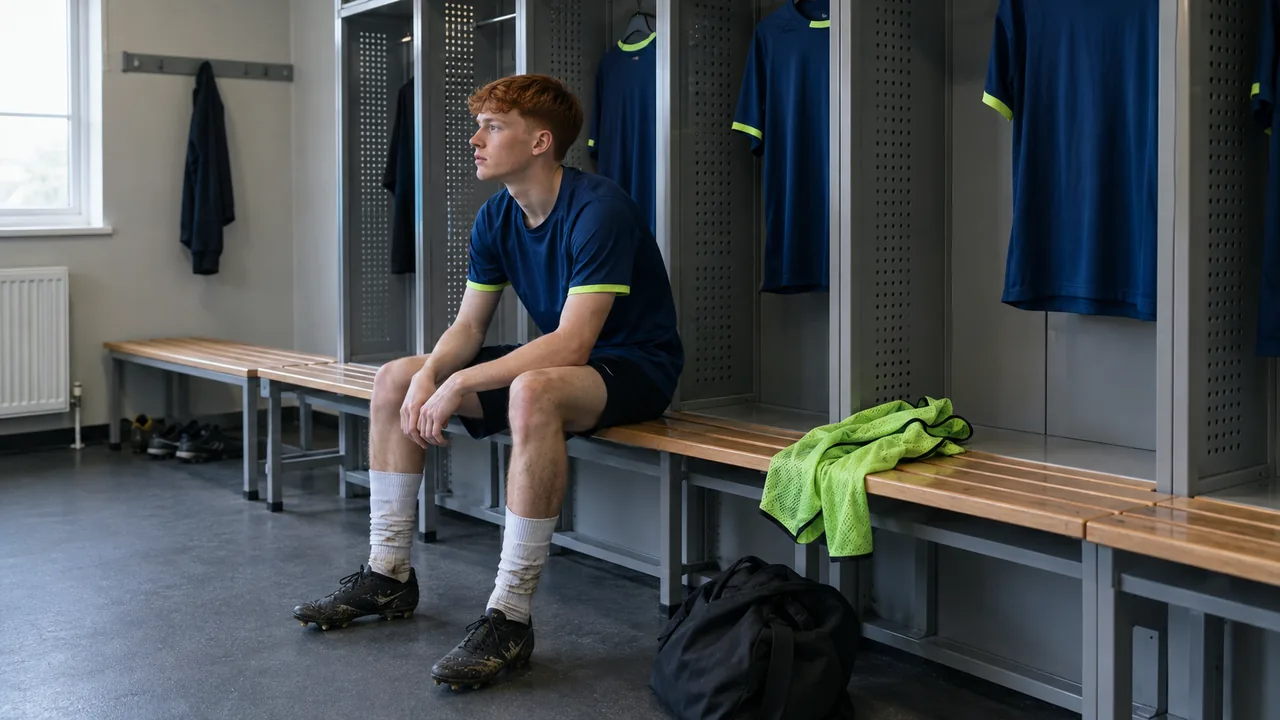
We all know the photograph of a player signing his first professional contract. A shirt on the table, the club crest behind him, his family beside him. The announcement recalls years of hard work, thanks the coaches and offers a few words about the future. The team-mates leaving that same club that summer might get their names on a short list. They spent years coming to the same training ground, taking part in the same sessions. Their families made the same journeys to away games. But when the season starts, the club has new stories to tell. What a released player will do on Monday morning is no longer football news.
We know that not everyone in an academy can turn professional. Yet we are far too comfortable praising the system that produces a successful player while treating the release of another as a personal failing. One becomes proof of the club’s approach to development; the other is judged to have fallen short. The same system, though, asked both of them for a similar commitment over many years. School arranged around training, weekends given over to matches, the time and travel costs shouldered by families: none of this was exclusive to the players who eventually signed contracts. The gap between what football asks young people to sacrifice and the futures it can offer them becomes clearest on the day they are released.
Former West Ham academy player Iyiola Adebayo describes delivering for Domino’s six months after captaining a side at the club. The Guardian interview. It is easy to read that detail as a story of decline. But there is nothing shameful about working as a delivery driver. The question is what a young person is left with when the future he has spent years preparing for disappears. The discipline he showed in football does not automatically make his first job application easier. Putting a club’s name on his CV cannot replace the training another occupation requires. When he needs to earn a living, the promise he once showed can only take him so far.
Liam Robinson, who played alongside Trent Alexander-Arnold in Liverpool’s academy, was working in sewers and drainage for United Utilities when he spoke to BBC Breakfast in April 2023. He explained that he had been so focused on becoming a professional footballer that he had not planned for another future. After learning he would be released, he had gone back to the changing room and cried. In his new job, he faced jokes about his Liverpool past. He said they made him feel worthless, as though he ought to be doing better. BBC interview, republished by BusinessGhana.
Robinson was working. Even so, people could belittle his job by comparing it with the shirt he once wore. The pressure on a released academy player does not necessarily stop there: he is expected to build a life outside football, then reminded that the life he has built is less glamorous than the one he might have had. For someone known as “the footballer” long before turning eighteen, that comparison may be difficult to escape. Even years in another occupation may not separate him from his former club in other people’s eyes. What he might once have become overshadows the work he actually does.
Josh Agbozo also featured in the BBC report. He had spent years playing alongside Alexander-Arnold in Liverpool’s academy before being released at sixteen. He explained that injuries had prevented him from fully showing what he could do, and that afterwards he had been unsure what to do next. When the interview was published, he was working as an occupational therapy assistant. BBC interview, republished by BusinessGhana. His experience brings out something that gets lost in the language of squad decisions: a player’s opportunity can end without him feeling that he ever had a proper chance to prove himself. The club has reached its verdict; the player is still wondering what might have happened without the injuries. Starting another job does not settle that question.
It matters that we know about these lives. But pointing to a few former players who have found work does not establish that the system supporting them after release is working. Their accounts show that a transition is possible, not that everyone makes it on equal terms. Even a player hoping to go on trial at another club has costs to consider: travel, accommodation, food and time without an income. Someone whose family can support him for a few more months is making a different decision from someone who needs to start work immediately. One prepares for next week’s trial while the other tries to get time off work. If the second player cannot attend, how much does that really tell us about his ability or commitment to football?
Advice about never giving up comes easily in football. We love the player who rises through the lower leagues, scores against the club that rejected him years earlier and proves his doubters wrong. Because we know how the story ends, we read every setback as another step towards success. We hear less from those who followed a similar route without finding a contract. Some may not have the money for another trial. Others may struggle to keep up the necessary training while working. Some will do everything they can and still not be the player a club wants. Fitting all of them into the same story about believing in yourself ignores both the limited places in a squad and the practical business of earning a living.
The cost of a football life that begins in childhood cannot be measured only in money spent. Time not spent exploring other interests is harder to account for. A young person who had little chance to develop an interest in a school subject, see what another occupation involves or imagine a future beyond football may only begin looking into his options after release. Telling him he is still very young is true, but it is not enough. There is a particular weight to not knowing where to begin while people your own age are already progressing through education or work. And he has to find the time to learn something new while dealing with the immediate need for an income.
At this point, jobs off the pitch are often offered as a ready answer. He could coach, become a scout or move into analysis. But these professions are not a waiting room large enough to accommodate everyone who cannot find a place as a player. They have qualification requirements, expectations of experience, competition and a limited number of positions. Completing a course does not guarantee a job. Years in an academy do not automatically teach someone to use analysis software or coach children. Acquiring those skills takes more time and, sometimes, more money. Telling someone how broad the industry is does little for him if he cannot afford that period of retraining. The question is whether there is a job he can realistically get and live on.
Football also needs to examine the language it uses to talk about careers. Publishing a vacancy does not make that opportunity accessible to everyone. An applicant may need to relocate, accept a low starting salary or rely on another source of income while gaining experience. A young person who once waited for selection as a player now faces job adverts asking for experience. There is a considerable distance between being close to football and earning a living from it. Continually talking about new opportunities without explaining that distance creates another expectation before the last one has been met.
That is why a club’s responsibility cannot be judged solely on how sensitively it handles the release meeting. After years of planning a young person’s week, goals and development, how much interest does it take in his life once he is out of the squad? Does it know whether he completed his education? Does someone check in a few months later if he has not found another club? Is the person he was told to contact for support still there? Saying that contracts cannot be offered to everyone does not answer these questions. What matters is not just how many places exist in a squad, but what happens to the people who have spent years preparing to fill them.
We should not describe the work Adebayo, Robinson and Agbozo do as a consolation prize for the football careers they missed out on. Working in another occupation should not be treated as an attempt to prove their worth to the public all over again. We do not need an extraordinary comeback, a fortune or an inspirational ending from any of them. We can stay with the more uncomfortable question: when someone has organised so much of his childhood around football, has he been adequately prepared to build a life when he leaves it?
Clubs track the first-team minutes, transfers and fees generated by their academy graduates. It should be possible to take the lives of those who leave just as seriously. Of the players released last year, how many are still in education, how many are looking for work and how many are still waiting for a contract? Why should their lives be left out when an academy tells its success story? We know where the player in the signing photograph is today. Does the club know where his team-mates are?


