The Rise of Greek football
Twenty-two years after Greece's historic Euro 2004 triumph, a new generation of Greek footballers is emerging and making its mark across European football. From improved youth academies to a more competitive domestic league, discover how Greece is rebuilding its footballing identity and why this golden generation could change the future of the national team.
This article was originally written in English .
One of the main characteristics that has made football so fascinating throughout its history is its unpredictability. Among the most exciting surprises the game has to offer is the miracle of the underdog — a phenomenon that gives us all hope that, at any moment, we might witness a weaker team defeat a stronger opponent and, more rarely, go on to lift a trophy.
This hope is what makes every match and every competition exciting. Whenever we watch a game or a final that does not involve our own team, we often find ourselves rooting for the underdog. Looking back at football history, we can identify numerous remarkable miracles, including Leicester City's Premier League triumph in 2016, Denmark's unexpected European Championship victory in 1992, Liverpool's famous comeback against AC Milan in the Istanbul final, and, of course, Greece's Euro 2004 triumph — a victory that is inextricably linked to the subject we will explore today.
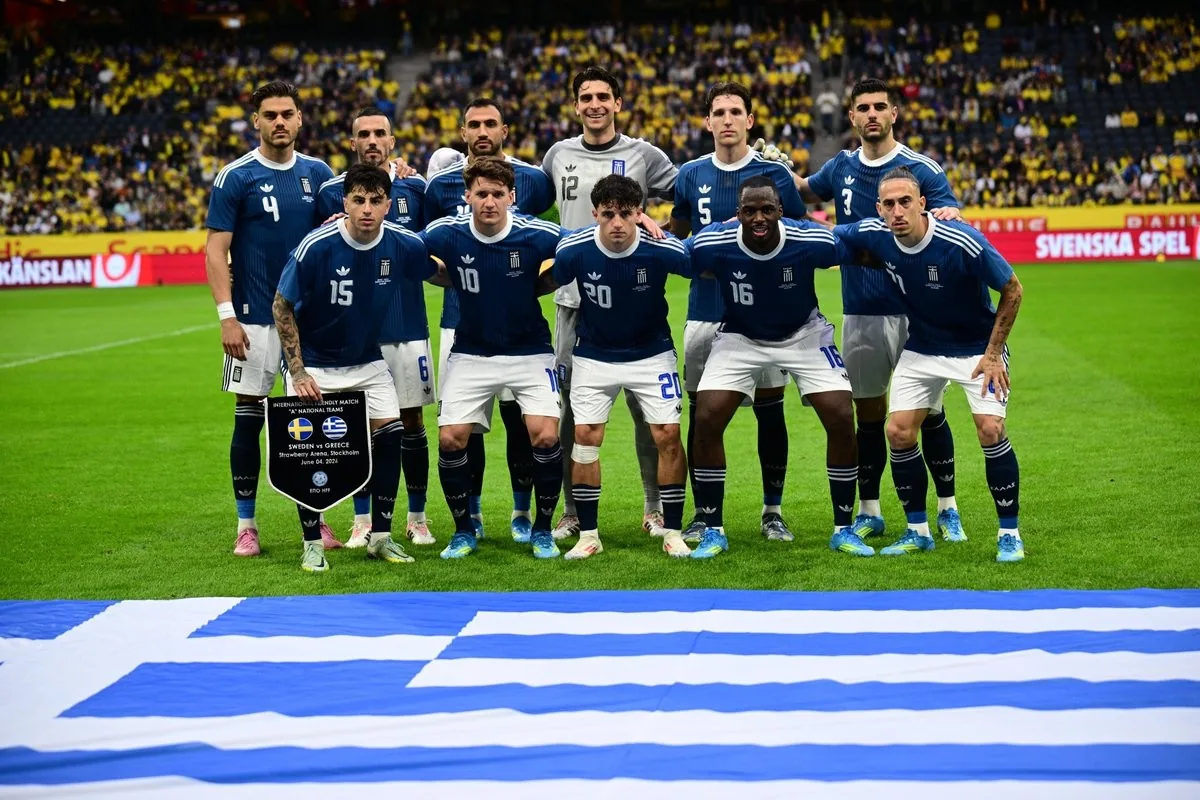
The phenomenon we will be examining today is the revival of Greek football, 22 years after the greatest achievement in the country's footballing history. A new generation of Greek players is making waves, with Greek footballers becoming increasingly prominent and major European clubs regularly trusting them to become key figures in their squads. With all this in mind, we will explore how and when this transition towards a golden generation took place, as well as how the improvement of the Greek domestic league has contributed to this development, with the country's clubs playing their own important role in the process.
Starting with the young Greek footballers themselves, one of the most encouraging aspects of this new wave of talent is that these players come from a variety of different clubs. This suggests that youth development is improving across Greek football as a whole, rather than being limited to the country's most famous and financially powerful academies, such as PAOK's, now widely recognised for its production of footballing talent, or Olympiacos, the club that won the UEFA Youth League in 2024.
The process of investing in Greek youth academies began to take shape through PAOK's strategy in 2017. As part of Mr Savvidis' vision to strengthen the Greek side of the first team, the club began investing in scouts tasked with identifying young players from across the country. Talented youngsters from every corner of Greece were brought to Thessaloniki and the club's training facilities, where Greek coaches worked to identify and develop the next generation of footballing talent.
One of the defining features of this new approach to youth development was the decision to place trust in former Greek footballers, giving them responsibility for organising and running the project, whether as coaches, scouts or academy directors. Building on this model and relying on people who had been part of Greece's successful footballing generation of 2004, other Greek clubs gradually began following suit. Olympiacos, Panathinaikos, Atromitos and, later, AEK all started investing in the organisation and development of their youth academies.
Supporting these individuals and introducing a more modern, football-oriented philosophy towards player development helped create a more diverse talent-production model. Until recently, Greece had been known primarily for producing defensively minded players. Today, however, the country is developing footballers with a much wider range of technical abilities, tactical profiles and attacking qualities.
As a result, in 2026, we are witnessing players of an outstanding level, such as Giannis Konstantelias, Konstantinos Karetsas, Konstantinos Tzolakis, Konstantinos Mavropanos, Konstantinos Koulierakis, Vangelis Pavlidis and many others, making their mark at the highest levels of European football. Together, they are helping shape a Greek national team that is attracting widespread attention and should not be underestimated. With an average age of around 23, this generation stands out — a profile rarely seen among national teams outside the traditional footballing superpowers, such as France and Germany.
Attacking intent, creativity and trust in homegrown talent, both at player and coaching level, could be considered the key ingredients behind the development of a successful academy system. Greece's approach is not necessarily revolutionary in itself, but it is certainly impressive when we consider that the country has a population of approximately 10 million, just one major achievement at senior international level, and a domestic league that has traditionally struggled to compete with Europe's strongest competitions.
Taking all these factors into account, it becomes clear that a well-organised youth academy system can benefit not only the national team but also the domestic league. Since the academy revolution began to take shape in 2017, the Greek league has become more competitive, with the long periods of dominance by a single club giving way to a more unpredictable title race. Four clubs can now challenge for the championship until the very end, with the title winner changing almost every season.
This increased competitiveness also benefits Greek clubs in European competitions. With several teams capable of challenging for domestic honours, more clubs have opportunities to test themselves against international opposition across the three major European club competitions in which they are eligible to participate. Such experiences can further accelerate their development and raise the overall standard of Greek football.
There is, therefore, renewed hope and anticipation surrounding Greece's footballing future. The coming years will reveal the ultimate outcome of this investment in youth development. If the project succeeds, Greece could become an inspiring example for other smaller nations seeking to compete with the established powers of world football.