The Ballon d’Or Asks One Question: Why Are We Answering Four?
Two brilliant seasons can make completely different cases for the Ballon d’Or. The harder part is this: what should matter most when both can feel like the right answer?
This article was originally written in English .
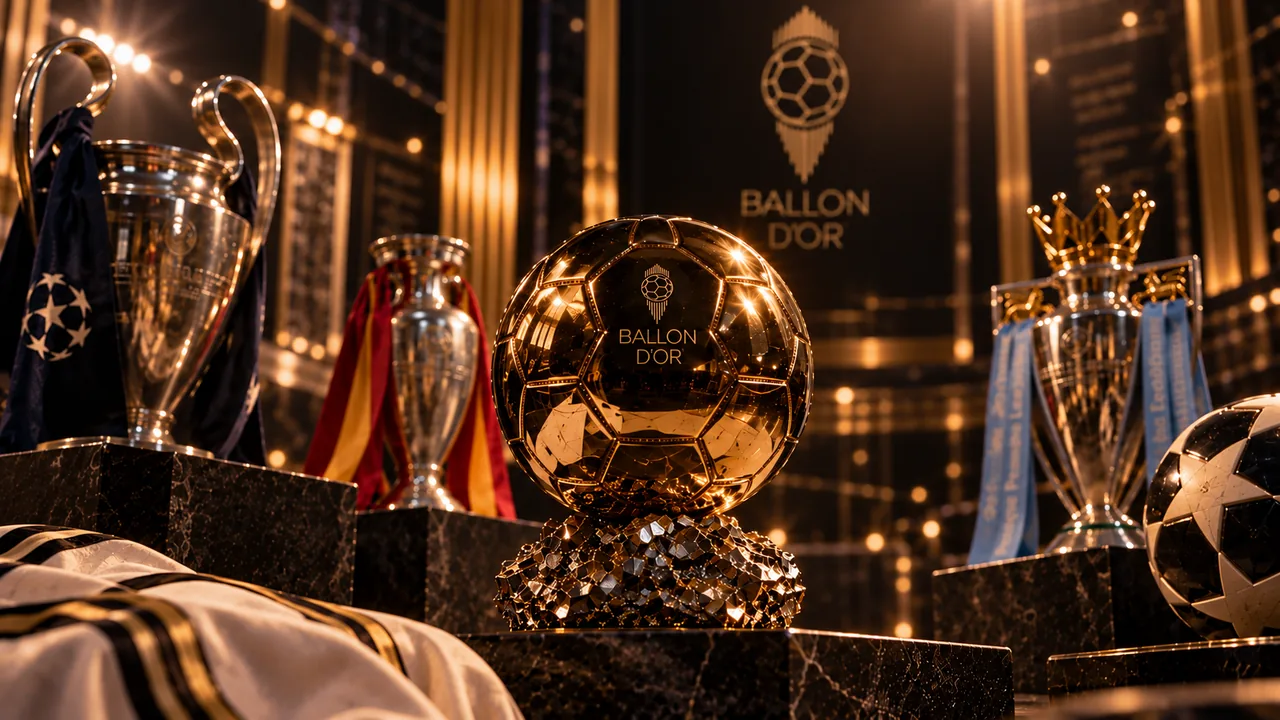
In 2024, Rodri won the Premier League with Manchester City and EURO 2024 with Spain and was named Player of the Tournament. Vinicius Junior lifted the Champions League with Real Madrid and was the competition’s Player of the Season. Rodri went on to win the Ballon d’Or, while Vinicius finished second.
Two outstanding campaigns, but two very different cases for being called the best. The problem is that “best” does not come with a measuring stick. And of course, there are official criteria, but they still leave plenty of room for interpretation.
Before anyone ranks the nominees, they have already ranked the things they value: consistency, silverware, decisive moments, individual quality. One voter looks at the whole season. Someone else cares more about the trophies. Another can’t get past those nights when a player seemed to own the game. Others might think one was just better at football.
That means we should settle one thing first: What exactly are we rewarding?
The One Who Was Excellent All Season
A Ballon d’Or case is built over months, so being brilliant in September should count too, not just in the run-in. Consistency favours whoever can maintain that level from start to finish.
It stops the award from becoming a highlight reel.
Still, is being consistently very good necessarily more impressive than reaching a level nobody else reached? Think about it: week after week of 8/10s versus a handful of 10/10s is not an easy comparison. And that is partly why consistency can feel like the safer argument. You’ve got a lot more evidence to fall back on.
But there is another meaning of “best” here. A player could outperform a rival for an entire year, and you might still pick the other one when asked: Who is the best footballer in the world?
If the Ballon d’Or is supposed to reward one period of football, should anything outside that period matter? Once we ask who is “really” better, reputation creeps in, and we are not looking at that period on its own anymore.
Having the best season and being the best are not the same thing.
The One Who Actually Won Something
Imagine this: Player A has an unbelievable season, and his team reaches a major final. Now give that match two endings. In one, his teammate scores the winner. In the other, the same teammate misses. Nothing about Player A’s performance changes.
Does that suddenly make him a better footballer because somebody else finished a chance?
Winning a trophy is a collective effort. He can have a huge influence on the outcome without controlling everything around him. That makes silverware a messy way to judge individual quality.
Ignoring it altogether makes even less sense. If he is one of the driving forces behind a successful side, what that team achieves should count for something.
What if two players have been just as good, but one has a stronger squad around him? Does the medal settle the argument? Or was he just luckier?
Maybe silverware works better as context than as proof.
The One Who Owned the Nights We Remember
Nobody stores 50 games equally. Months later, a season gets boiled down to a few clips: a knockout goal, an impossible dribble, one performance where someone looked untouchable.
Big moments stick. We replay them over and over while everything else starts to blur. And whether we mean to or not, our memories can influence how we judge the rest.
A huge night is easy to remember. As unfair as it may sound, weeks of controlling games can all run together if nothing really stands out.
But giving those big nights extra weight is not unreasonable either. After all, not every match comes with the same level of pressure. Doing something extraordinary in a semi-final can mean more than doing it in a routine league fixture. The more people watching, the harder it is to forget.
So when should an epic night be allowed to rewrite the rest of the year?
The One Who Just Looked Like the Best Footballer
Forget the titles for a second. What if the question is: Who looked like the best player?
How do you even compare players doing their best work in completely different parts of the pitch?
A winger could give you a goal, a dribble, an assist, a clip everyone can see. A midfielder might control the tempo, keep finding the right spaces, make the pass before the assist, or stop a transition early. A defender may be incredible precisely because nothing happens.
A goal leaves something to replay. Stopping an attack often does not.
Stats can help, especially when memory and reputation get in the way. But some parts of the game fit into numbers more neatly than others. Goals are easy to count. Assists too. Control and prevention are much harder to pin down.
And ultimately, all of that has to go on the same list somehow.
Nobody Agreed on the Marking Scheme
Two people could agree on almost everything that happened over the season and still end up with different winners. By the time a voter picks a No. 1, they have already decided what matters most to them.
The list might be ranking players, but really, the criteria are being ranked too.
That is probably why Ballon d’Or arguments can go in circles forever. Everybody seems to have an answer to Who was the best? But we can’t seem to agree on what “best” actually means.
Whether you backed Rodri or Vinicius (or neither), you were probably using your own rubric anyway.
And football being football, we were never going to agree on that.