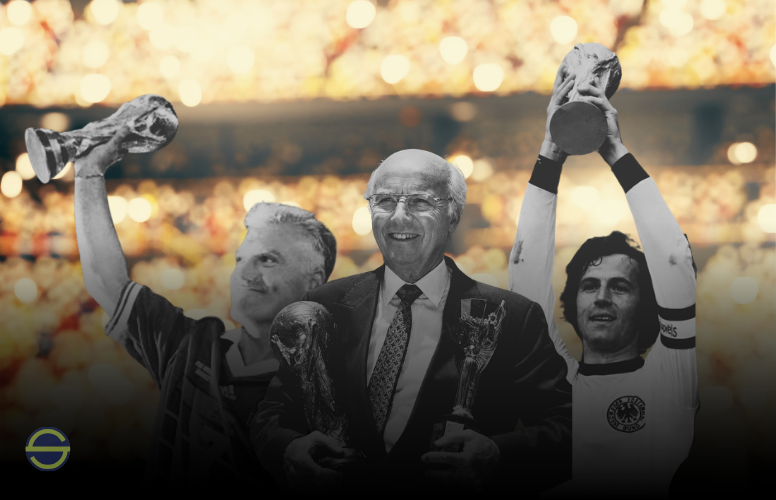
World Cup History Is Not Written by Footballers Alone
World Cup history is often remembered through goals, trophies and legendary players. But football’s biggest stage has also been shaped by sculptors, designers, engineers, technology teams and invisible professionals whose work changed how the game is played, seen and remembered.
World Cup History Is Not Written by Footballers Alone
When people think of the World Cup, they usually think of goals first.
A trophy lifted on a final night. A goalkeeper’s impossible save. A star player defining an entire tournament. A manager directing every movement from the touchline. Football memory often works through these images, because cameras follow them, headlines carry their names, and children put their posters on bedroom walls.
But World Cup history has never been written only by footballers and managers.
Football’s biggest stage is also shaped by people who never step onto the pitch. Sometimes it is a sculptor. Sometimes a graphic designer. Sometimes a technology team. Sometimes a refereeing system. Sometimes a ball engineer. Sometimes an operations professional whose work is invisible precisely because everything runs smoothly.
Their names are rarely sung in stadiums.
But their fingerprints are everywhere.
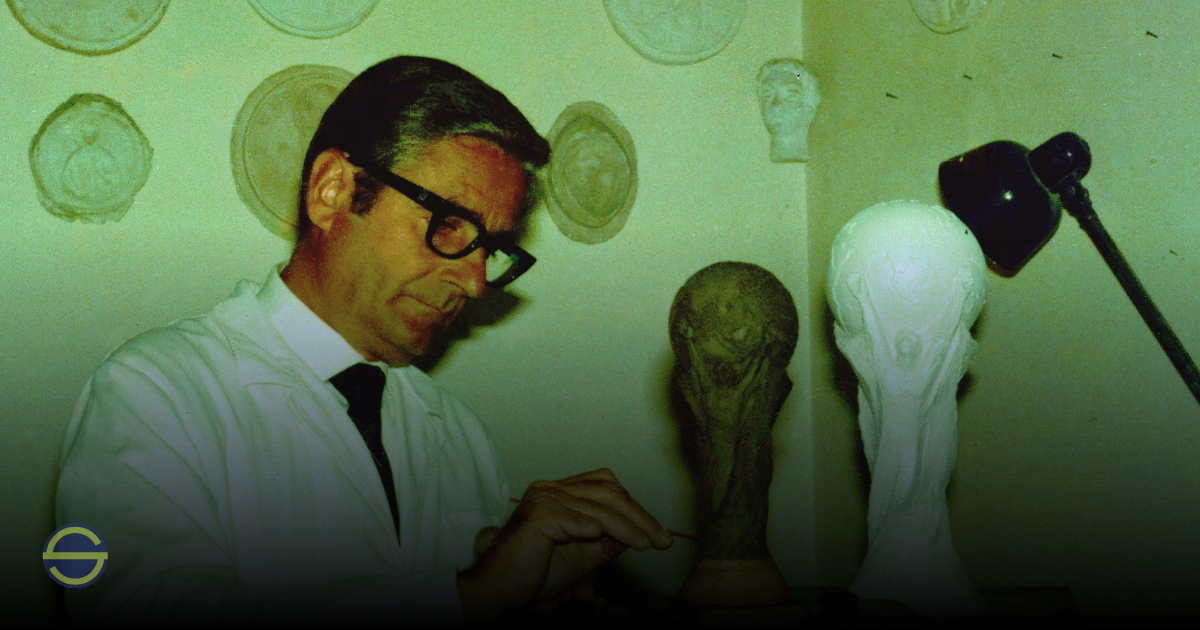
Silvio Gazzaniga’s story is a good place to begin.
Gazzaniga was not a footballer. He was not a manager. Yet he is remembered as the creator of one of the most recognisable objects in football history: the FIFA World Cup Trophy.
After Brazil won the tournament for the third time in 1970, the Jules Rimet Trophy was awarded to them permanently, and football needed a new symbol. That symbol was designed by an Italian sculptor. Today, when millions of people watch the trophy being lifted on a final night, they are also watching the work of someone who never played a minute of World Cup football.
That tells us something simple, but often forgotten:
Football memory is not only made by those who play the game. It is also shaped by those who design its symbols.
Another invisible success arrived at the 1966 World Cup: World Cup Willie.
Today, tournament mascots feel like a natural part of global football culture. But one of the starting points of that tradition on the World Cup stage came in England in 1966. World Cup Willie was a lion, but more importantly, he was a sign that football’s commercial, cultural and visual world was beginning to expand.
The person behind him was not a star player. Reg Hoye, a children’s book illustrator, left a mark on World Cup history without ever entering the pitch.
This reveals another side of football.
Sometimes the spirit of a tournament is carried by a mascot. Sometimes a drawing helps children connect with the game. Sometimes football culture begins at an artist’s desk before entering the memory of millions.
World Cup history is written not only in scorelines, but in symbols.
Then came technology.
The 2014 World Cup marked an important moment for goal-line technology. For decades, football had argued over one of its most sensitive questions: did the ball cross the line? From that point, the answer would no longer depend only on the human eye. Cameras, systems, software and technical infrastructure entered the decision-making process of the game.
This was not a tactical change. It was not a transfer. It was not a dramatic substitution.
But it was a major step in strengthening football’s sense of justice.
Behind these systems were engineers, software specialists, camera operators, testing teams and tournament planners. None of them became the star of the match. None of them gave the post-match interview. But they added trust to one of the most decisive moments in football.
Sometimes what enters World Cup history is not a goal, but the system that confirms whether the goal truly happened.
In 2018, VAR moved to the centre of the World Cup.
VAR is still debated. It is praised, criticised and sometimes accused of slowing the rhythm of the game. But controversy does not make it unimportant. On the contrary, it shows that football is no longer managed only by the people standing on the grass. It is also shaped by specialists sitting in front of screens, by video technology, communication protocols and decision-making structures.
The fate of a moment is no longer limited to what the referee sees in real time.
Video assistant referees, replay operators, technical coordinators and communication systems have become part of the game. In a World Cup match, a penalty decision may now depend not only on contact inside the box, but on a detailed review carried out by people the cameras rarely show.
Does this weaken football’s romance?
For some, perhaps.
But from another point of view, it expands football’s professional world. It creates new areas of expertise around the game. It opens new pathways for people who want to work in football without being on the pitch.
World Cup balls are another example of invisible achievement.
From the outside, a ball may look like nothing more than the basic object of the game. But every official World Cup ball carries the engineering, design and sports science of its time. Panel structure, surface texture, weight balance, aerodynamics and player feel are all shaped through long testing processes by specialist teams.
Sometimes a tournament ball is loved. Sometimes it is criticised. Either way, it becomes part of the conversation.
Because the ball is football’s most essential object. A player’s shot matters, but so does the way the ball moves through the air.
That is why ball designers, engineers and testing teams are also invisible actors in World Cup history. Their work rarely makes the headlines, but it can influence the rhythm of matches, the character of shots and the feeling of the game itself.
Another field is visual identity.
World Cup posters, logos, broadcast graphics, opening titles, photography and stadium visuals all shape how a tournament is remembered. Some World Cups stay in the mind not only because of the final, but because of their colours, posters, design language and cultural atmosphere.
Since 1930, every tournament has created its own visual memory.
And that memory is not created by footballers. It is created by artists, graphic designers, creative directors, photographers, broadcasters and communication teams.
When we watch a World Cup, we are not only watching football. We are also watching the design, technology, media language and cultural storytelling of an era.
That is why we should stop thinking about football careers too narrowly.
You do not have to score a goal to leave a mark on football. You do not have to manage a national team either. World Cup history is full of examples that prove this.
A sculptor can touch football’s greatest moment by designing its trophy.
An illustrator can enter tournament memory by creating a mascot.
An engineer can strengthen the game’s sense of justice through goal-line technology.
A video team can influence the fate of a match through VAR.
A ball designer can change the physical feel of the game.
A graphic designer can create the visual identity by which a tournament is remembered for decades.
None of these are “backup careers.”
They are real football professions.
The problem is that football has often explained career dreams too narrowly. You either become a player, or you become a coach. If not, you are outside the game.
Modern football tells a different story.
Football is now a layered industry, culture and community. It contains health, data, analysis, design, media, law, psychology, technology, operations, safety, communication and human relationships.
The World Cup is the most visible showcase of that world.
But behind the showcase, thousands of people are working.
Perhaps this is exactly where Kickwise’s story begins.
A football career is not only about being visible on the pitch. It is about helping the game develop, become fairer, work more professionally, be told more clearly and reach more people.
Not everyone who entered World Cup history scored a goal.
Some shaped the trophy.
Some drew the mascot.
Some built the technology.
Some designed the ball.
Some created the visual memory of the tournament.
Some helped the game be judged more accurately.
That is where football’s true scale becomes clear.
Twenty-two people are visible on the pitch.
But the world that makes the game possible is much bigger than that.