Unai Emery and the Cup That Keeps Finding Him
Unai Emery’s Europa League story has become one of football’s great managerial case studies. From Sevilla’s dynasty to Villarreal’s miracle and Aston Villa’s triumph in Istanbul, his career shows how preparation, adaptability and specialist knowledge can shape European nights.
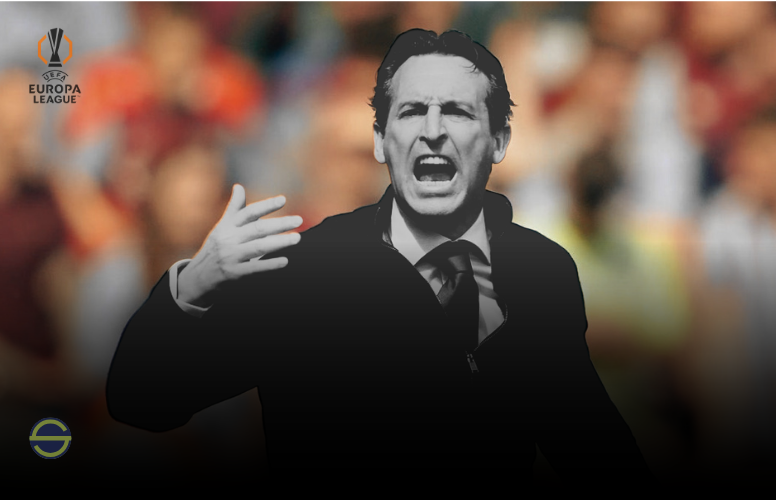
Some managers win trophies. Some build teams. A few become inseparable from a competition.
Unai Emery belongs to that last, rarer category.
After Aston Villa’s 3-0 win over Freiburg at Beşiktaş Park in Istanbul, the Europa League once again felt less like a tournament and more like familiar territory for Emery. Another final, another carefully prepared night, another version of the same old truth: when this competition reaches its decisive stage, Emery understands its rhythm better than almost anyone.
This was not the beginning of the story. It was another chapter.
Emery’s relationship with the Europa League first became serious in Seville. In 2014, Sevilla beat Benfica and lifted the trophy. At the time, it looked like a great achievement. A year later, when Sevilla defeated Dnipro, it started to look like a pattern. By 2016, after beating Liverpool in the final, there was no longer much room for coincidence. Three consecutive Europa League titles had turned Emery from a successful coach into one of the defining figures of the competition’s modern era.
Then came Villarreal.
That victory in 2021 carried a different kind of weight. Villarreal were not Sevilla. They were not a club expected to dominate European finals. Yet Emery gave them the same clarity, the same belief, the same ability to live inside the small details of a knockout night. Beating Manchester United on penalties did more than give Villarreal their first major European trophy. It proved that Emery’s Europa League mastery was not tied to one club, one generation, or one specific dressing room.
There was also the lost final with Arsenal in 2019. And perhaps that matters too. Because Emery’s story in this competition is not simply a perfect sequence of victories. It includes disappointment, pressure, and the difficult business of returning to a place where everyone already knows what you are supposed to be good at. That is often harder than the first success.
Which makes Istanbul feel important.
Aston Villa’s win over Freiburg was not just another line on Emery’s CV. It connected different versions of his career: the Sevilla dynasty, the Villarreal miracle, the Arsenal setback, and now Villa’s return to the European stage. Different clubs, different squads, different expectations — but somehow the same signature.
No manager has owned this competition quite like Emery.
Giovanni Trapattoni, one of European football’s great managerial figures, won the UEFA Cup three times — with Juventus in 1977, Inter in 1991, and Juventus again in 1993. Luis Molowny won it twice with Real Madrid in the mid-1980s. Juande Ramos built his own Sevilla legacy with back-to-back UEFA Cup titles in 2006 and 2007. Rafael Benítez, José Mourinho and Diego Simeone have also lifted the trophy twice, each leaving their own mark on the competition’s history.
But Emery has moved into a different category.
His three consecutive titles with Sevilla made him the modern face of the Europa League. Villarreal’s 2021 triumph proved that his expertise could travel beyond one club and one cycle. And now, after Aston Villa’s 3-0 win over Freiburg in Istanbul, he has stretched the distance between himself and everyone else. This is no longer just a strong record. It is a body of work.
For Aston Villa, this trophy will mean something deeply emotional. The club has always carried European history, but for many years that history lived more in memory than in the present. Emery has helped drag that memory forward. He has not just given Villa a cup; he has given them a modern European identity again.
For Freiburg, the night will hurt. Their journey to the final was the kind of story football still needs: well-built, honest, ambitious, and a reminder that smart structures can still carry clubs far beyond expectation. But finals are rarely kind to sentiment. In Istanbul, romance met expertise. Expertise won.
That is what Emery brings to these nights. His teams are not always the loudest, the fastest, or the most spectacular. But they usually know what the game is asking for. They understand when to slow the tempo, when to suffer, when to press, when to wait, and when to strike. There is a professional calm to his European finals, a sense that every role — from the coach to the analyst, from the captain to the substitute — has been rehearsed into the larger plan.
And that is why this story feels right for football beyond the scoreboard.
Because Emery’s career is also a reminder that the game is shaped by specialists. Not only by star players or iconic goals, but by people who understand specific environments better than anyone else. Some managers are league builders. Some are rebuilders. Some are developers of talent. Emery has become something more particular: a master of European knockout football, especially in the competition that keeps returning to him.
Five Europa League titles do not happen by accident.
They come from preparation, adaptability, obsession, and the ability to transfer knowledge from one club culture to another. Sevilla, Villarreal, Aston Villa — each had its own reality. Emery did not copy and paste success. He translated it.
That may be the most impressive part.
In the end, the trophy will travel back with Aston Villa. The celebrations will belong to their players, staff, supporters, and everyone who helped bring the club back to this kind of night.
But the competition itself? Its modern memory still carries Unai Emery’s fingerprints.
In Istanbul, Villa won the final.
Emery, once again, seemed to know the route before anyone else.