
The Changing Landscape of Football Careers: Beyond the Pitch
Football careers are no longer limited to players, coaches and executives. As the game becomes more specialized, clubs increasingly rely on analysts, scouts, medical teams, operations staff, digital professionals and other experts who shape success beyond the pitch.
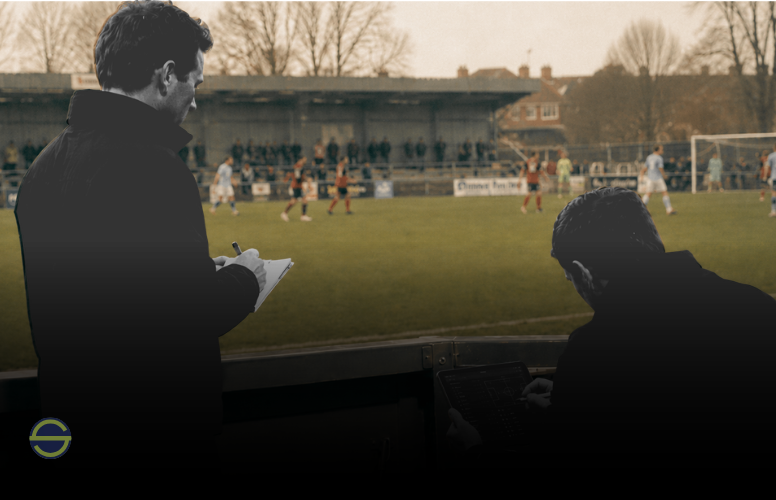
For generations, the public imagination of a football career has been dominated by a familiar cast: players, head coaches, and perhaps a handful of iconic executives. They remain central to the game. Yet modern football is no longer sustained by a narrow circle of visible figures. Behind every club, academy, national team, and emerging football project sits a growing professional ecosystem — analysts, scouts, medical staff, recruiters, performance specialists, communications teams, legal advisors, operations managers, and many others whose work increasingly influences competitive outcomes.
This shift is not cosmetic. It reflects a broader transformation in football itself.
The sport is becoming more specialized, more international, and more accountable. Clubs are expected to identify talent earlier, recruit more intelligently, protect player welfare, operate efficiently, build stronger commercial identities, and communicate with increasingly global audiences. At the same time, investment in analytics, talent systems, and organizational infrastructure continues to rise across the wider sports industry.
Football Is Becoming an Industry of Specialists
The modern football club is no longer built around a single technical department and a small administrative team. It increasingly resembles a multidisciplinary organization, where sporting decisions are supported by expertise across recruitment, data, sports science, psychology, finance, media, and operations.
A recruitment decision, for example, may involve live scouting, video analysis, data profiling, contract considerations, medical evaluation, and long-term squad planning. A player’s performance may be shaped not only by coaching, but by strength and conditioning, recovery protocols, nutrition, rehabilitation, and match-load management. A club’s public standing may depend as much on its digital strategy and employer reputation as on matchday results.
This does not diminish football’s instinctive and emotional qualities. It sharpens them. Better structures allow football people to make better decisions.
FIFA’s recent development work also reflects this wider view of the game: talent pathways are increasingly understood not only through players, but through coaches, referees, and the broader professional systems required to sustain football at scale.
The Rise of Roles That Once Sat in the Background
Some of the most important careers in football today are not entirely new, but their influence has changed dramatically.
Performance analysts are now part of everyday decision-making, helping technical teams prepare for opponents, review training, and understand tactical patterns with far more precision than was possible a generation ago.
Scouts and recruitment analysts are operating in a more complex market, where clubs are expected to combine traditional judgment with video, data, and strategic fit. The strongest recruitment processes no longer rely on volume alone; they depend on clarity, speed, and evidence. Recent industry commentary and job-market signals point to growing demand for hybrid profiles that can move between scouting, analysis, and recruitment intelligence.
Sports science and medical professionals have also moved closer to the core of elite performance. Availability has become a competitive asset. Preventing injuries, managing physical load, and extending player longevity are now part of the strategic conversation at serious clubs.
Football operations staff — often less visible to supporters — are equally essential. They keep clubs functional across logistics, compliance, academy structures, player care, and institutional planning. Their work rarely appears in highlight reels, yet the absence of strong operations is immediately felt throughout an organization.
Technology Has Expanded the Definition of Football Work
Technology is not replacing football expertise; it is increasing the demand for it.
Artificial intelligence, advanced data tools, wearable technology, video platforms, and digital scouting systems are creating new forms of football work while reshaping existing ones. The 2026 sports industry outlook identifies AI-driven operational change as one of the central forces affecting sport more broadly. In football, this translates into new expectations around information management, recruitment modeling, fan engagement, and internal efficiency.
The key point is not that every club is becoming a technology company. It is that football professionals are increasingly expected to understand how technology supports better decisions. A scout who can interpret data, an analyst who understands tactical context, or a communications professional who can translate a club’s identity across digital platforms becomes more valuable in this environment.
The career paths surrounding football are therefore widening. They now attract people from data science, law, design, software, psychology, marketing, education, and health disciplines — all bringing skills the modern game increasingly needs.
A More Professional Game Requires Better Career Visibility
Despite this expansion, access to football careers remains uneven. Many roles are still filled through limited networks, informal visibility, or fragmented hiring channels. Talented professionals may struggle to discover opportunities; clubs may struggle to reach the right candidates outside their immediate circles.
This gap matters.
As football becomes more specialized, recruitment must become more transparent and more precise. Clubs need better ways to present roles clearly. Candidates need better ways to demonstrate the full value of their experience. Emerging professionals need to understand that a career in football is not confined to one traditional pathway.
The industry benefits when opportunities become easier to find, easier to evaluate, and easier to match.
Beyond the Pitch Is Where the Future Is Being Built
The future of football will still be defined by goals, moments, and the people who deliver them under pressure. But those moments are increasingly prepared by an invisible architecture of expertise.
A late winner may begin with a data insight identified months earlier. A breakthrough player may have been discovered by a regional scout with exceptional local knowledge. A season saved from collapse may owe something to medical planning, recovery management, or operational stability. A club’s long-term rise may be rooted in smarter hiring far away from the public eye.
Football is not losing its soul by becoming more professional. It is becoming more capable of supporting excellence.
And for those seeking to build a life in the game, that is the opportunity: football careers are no longer defined only by proximity to the pitch, but by contribution to the wider ecosystem that makes the pitch matter.